
Approach AI Sprint Canvas
IP & tools
From ambiguity to structured exploration.
An AI-assisted evolution of the Design Sprint, built to give a team back the days it loses before it can start thinking.
- Type
- Internal product · IP
- Built at
- Capgemini
- Role
- Creator and product direction
- Purpose
- Operationalize AI-assisted Design practice
01 Why
I don’t only design products. I design how teams design.
AI is changing not only what organizations can build, but how teams understand challenges, explore possibilities, prototype and make decisions.
That shift is easy to talk about and hard to operationalize. A team does not adopt a new practice because it is described to them; they adopt it when the practice is sitting inside the tool they already have open. So I built one.
02 What it does
Six places where a sprint loses time.
The Canvas is an AI-assisted evolution of the Design Sprint, designed to accelerate:
- understanding of challenge context
- problem and opportunity mapping
- generation of contextual solution directions
- exploration with synthetic personas
- diagnosis and proposal support
- solution tangibilization
None of these are the interesting part of a sprint. They are the scaffolding a team has to build before the interesting part can start, and the scaffolding is where the week goes.
03 The flow
One challenge, four stages.
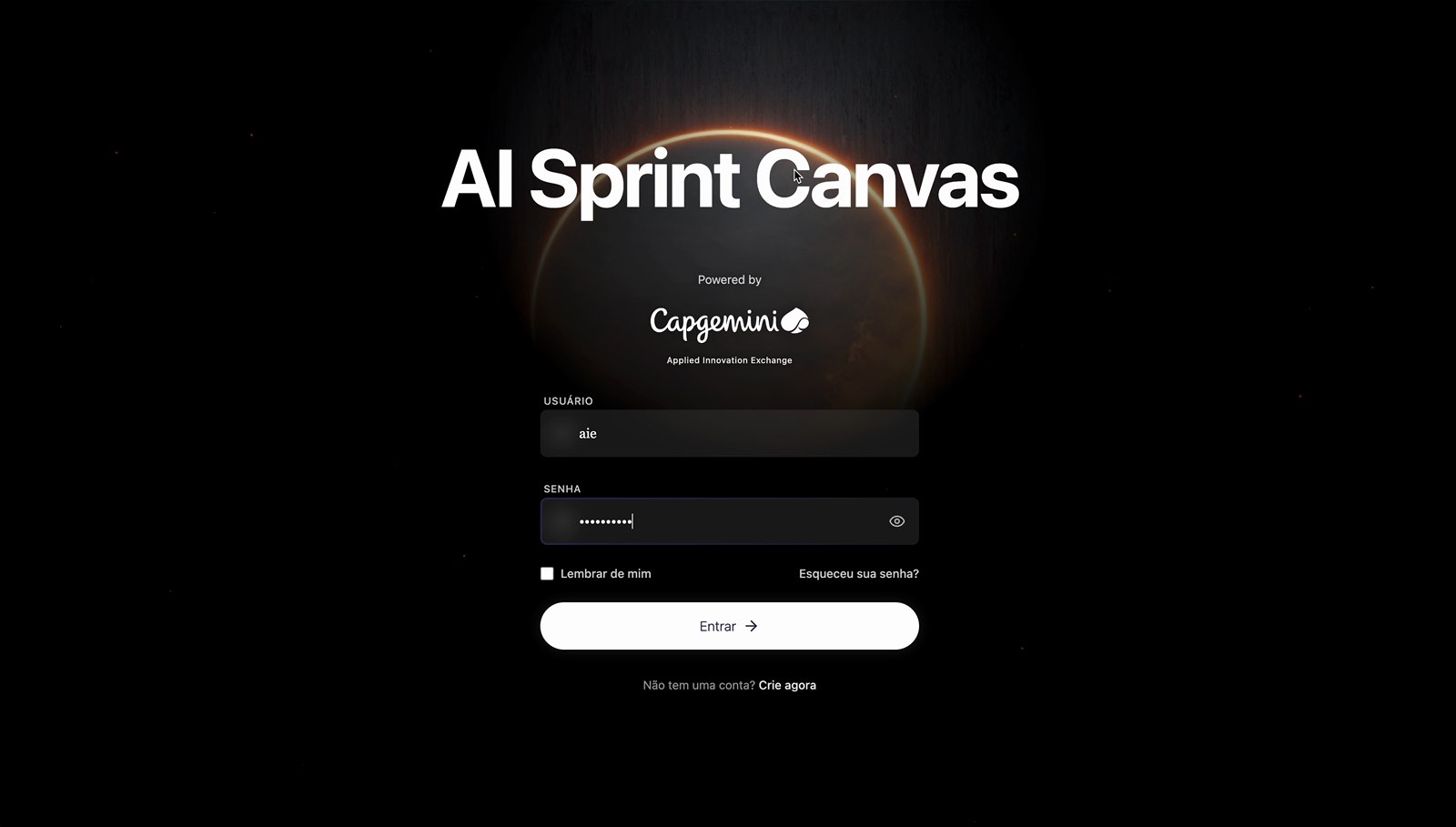
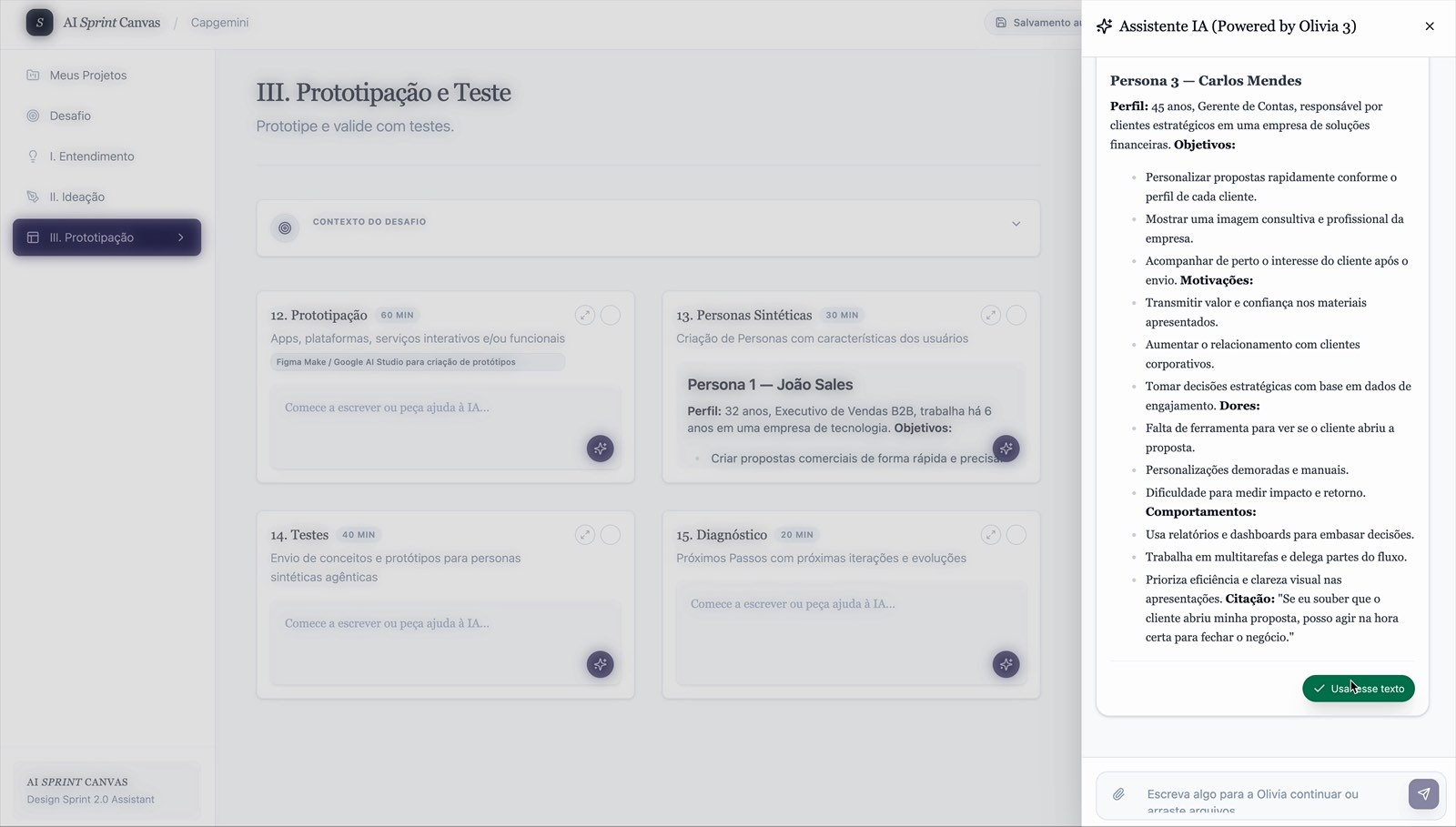
The product opens on a single question, Qual desafio você quer resolver hoje?, and holds everything that follows against it.
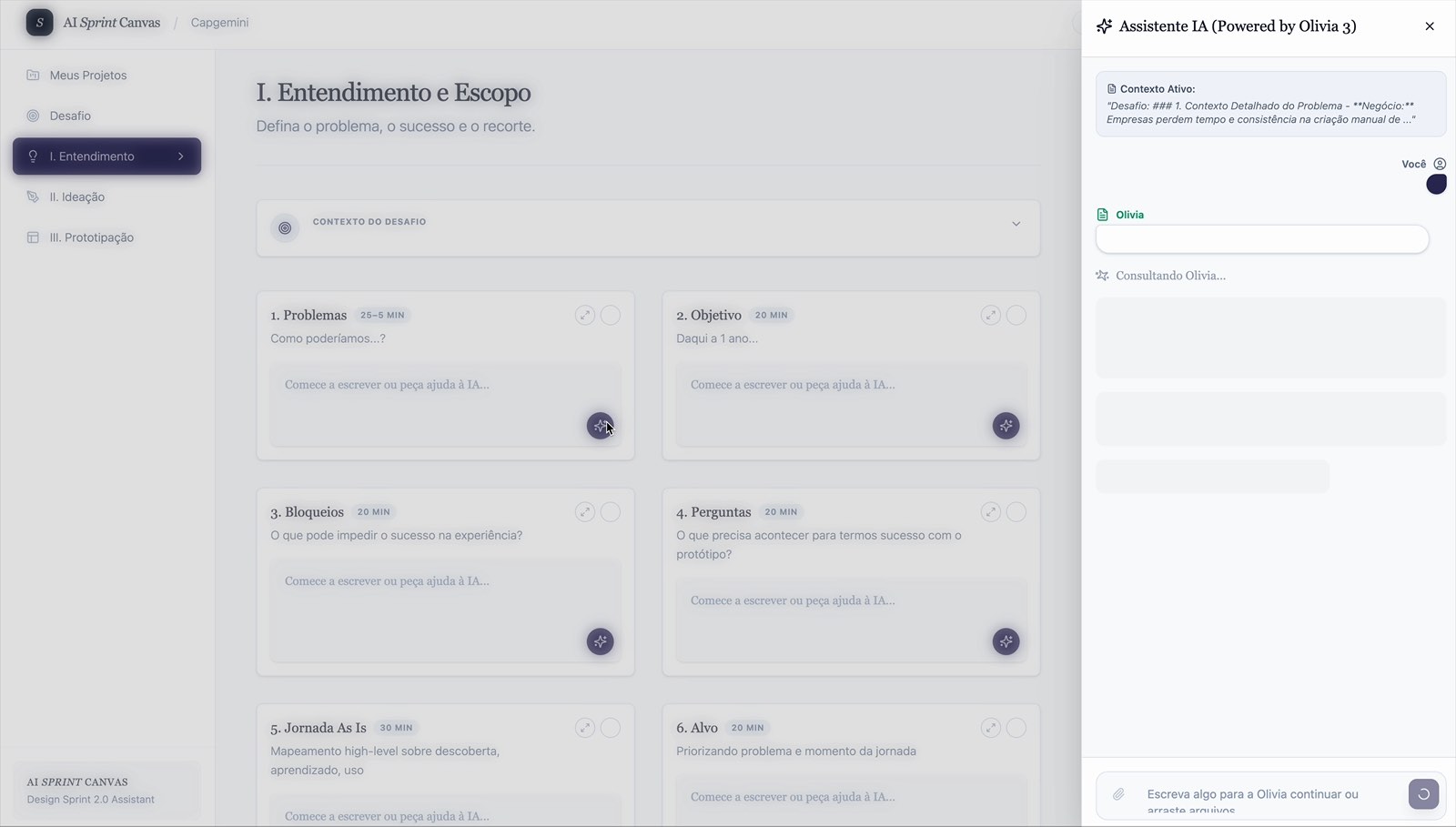
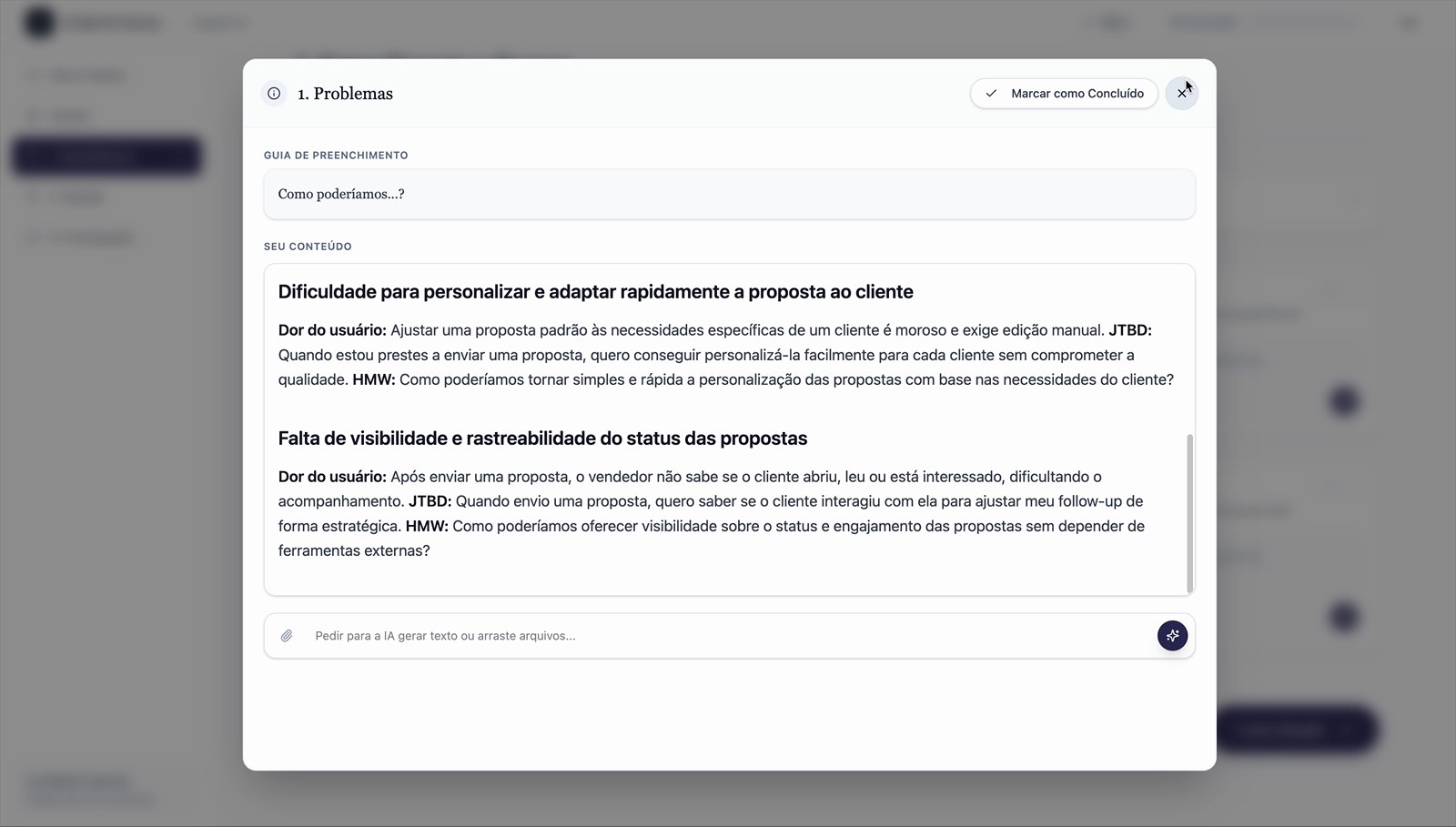
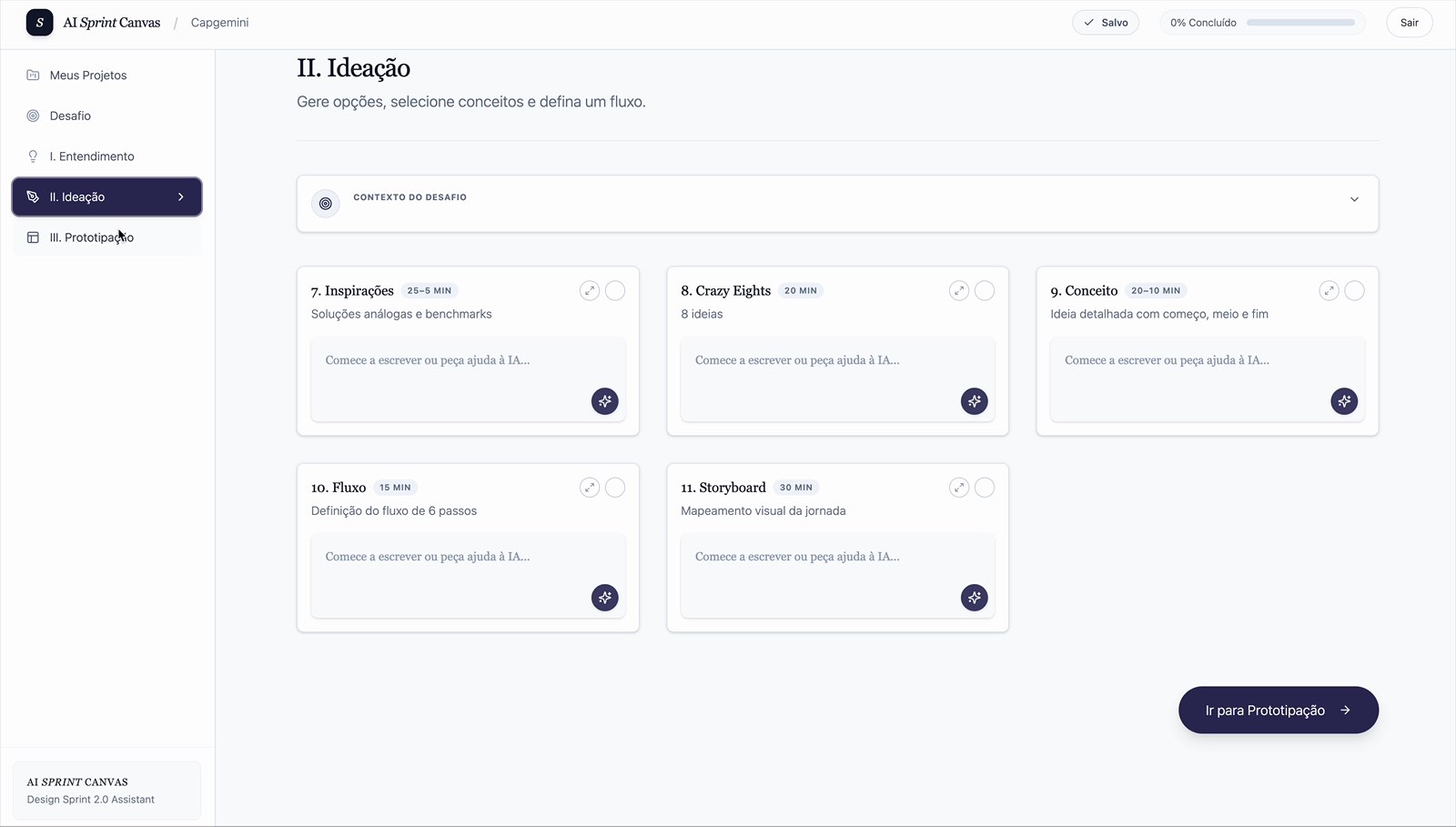
From there: Entendimento e Escopo, then Ideação, then Prototipação e Teste. Each stage is a set of framed prompts rather than a blank canvas: problems, objective, blockers, questions, the as-is journey, the target, with an assistant that drafts a first pass the team then argues with.
The design bet
A first draft you disagree with moves a room faster than an empty template everyone is polite about. The Canvas is built to be argued with, not accepted.
04 Synthetic personas
Something to test against on day one.
The prototyping stage generates synthetic personas from the challenge context, so a team can put a concept in front of someone before it has recruited anyone.
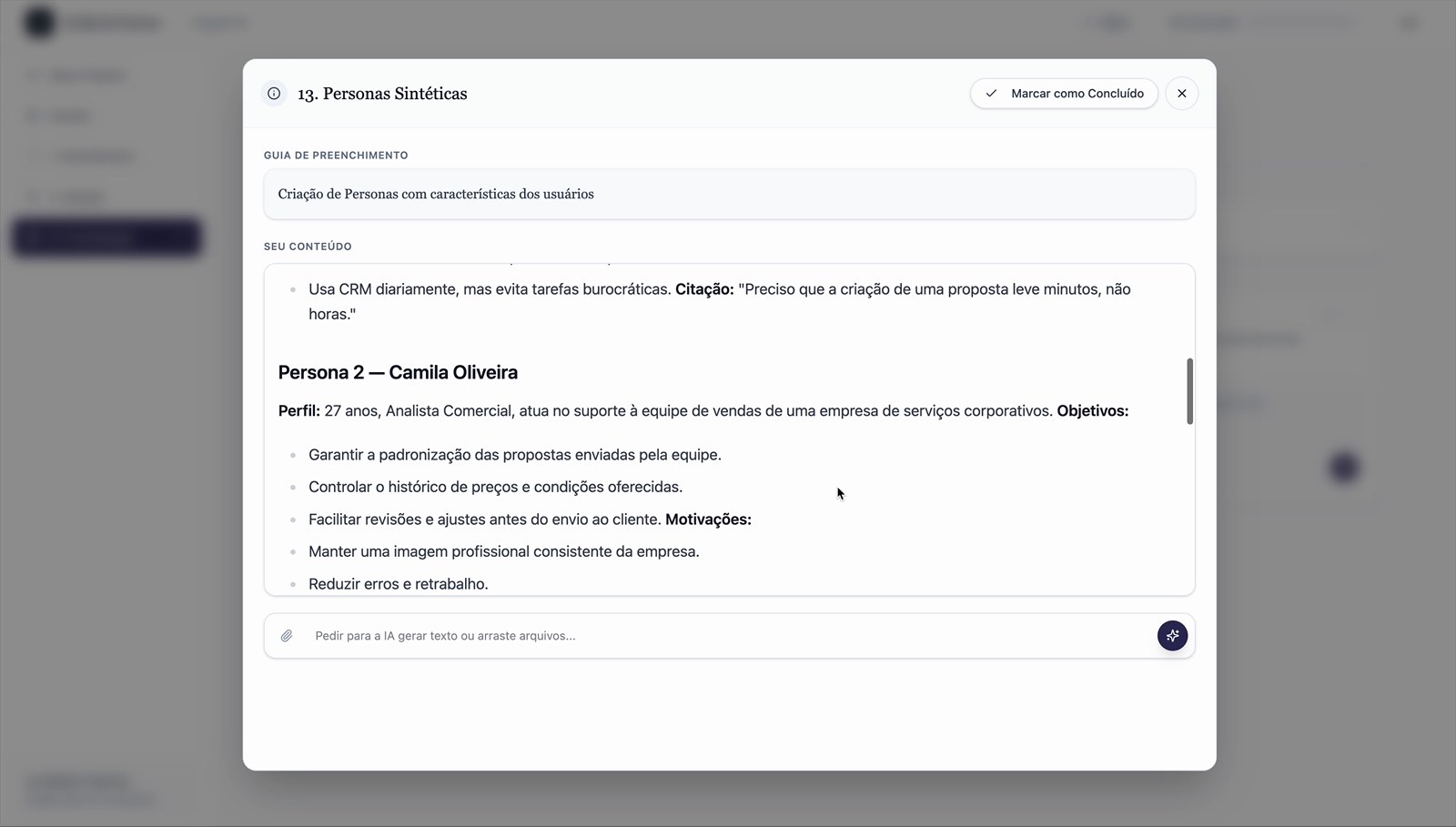
The value is not that the persona is right. It is that the team has something specific to be wrong about, early, while changing direction is still cheap. Synthetic exploration does not replace research; it changes what the first real session is for.
05 Where it fits
Two tools, one practice.
The Sprint Canvas structures how a team explores. The AI Design Checklist structures how they judge what they have made. It is a practical framework for evaluating AI-enabled journeys and making more deliberate experience decisions.
06 How I built it
I designed the practice, not the deliverable.
A team does not adopt a new way of working because someone described it to them. They adopt it when it is sitting inside the tool they already have open. That premise decided everything about how I built this.
-
I built around where a sprint loses time, not around the ideal sprint
I listed the six places a team actually loses days: the scaffolding everyone assembles before the thinking can start. The Canvas is built around those six, not around a better description of how a sprint should go.
-
I replaced the blank canvas with framed questions
Each stage asks for specific things. Problems, objective, blockers, questions, the current journey, the target. A blank canvas is not neutral. It is a tax paid by whoever in the room finds it hardest to start.
-
I made the assistant produce a first draft to disagree with
The assistant writes, the team argues. Editing is faster and more honest as a group activity than generating, and it puts the team's judgment on the critical path instead of their fluency.
-
I generate synthetic personas so a team can be wrong early
The value is not that the persona is accurate. It is that the team has something specific to be wrong about while changing direction is still cheap. This does not replace research. It changes what the first real session is for.
-
I built a second tool for judging, not only for exploring
The Sprint Canvas structures how a team explores. The AI Design Checklist structures how they judge what they made. Exploration without a matching standard of judgment just produces more things to review.
Tooling is the only kind of design leadership that keeps working when I am not in the room. That is the whole reason this exists.