
AI & Innovation Portfolio Arquitet.AI
03 · What’s next
From product catalog to personalized environments.
An AI application that turns a product catalog into personalized rooms. I built it for the salesperson on the shop floor, not for the customer at home.
- Role
- Management of the concept and prototype
- Organization
- Capgemini · Applied Innovation Exchange
- Client
- Global home-improvement retailer
- Focus
- AI experience · Retail journey
01 The work
I managed the creation of an AI application capable of generating personalized spaces using products available in the retailer’s assortment.
It is built for the salesperson on the shop floor, not for the customer at home. A client describes what they want, the assistant asks the three questions that actually determine the answer, which are which room, which style and what budget, and then generates a realistic image of the space with real products placed in it.
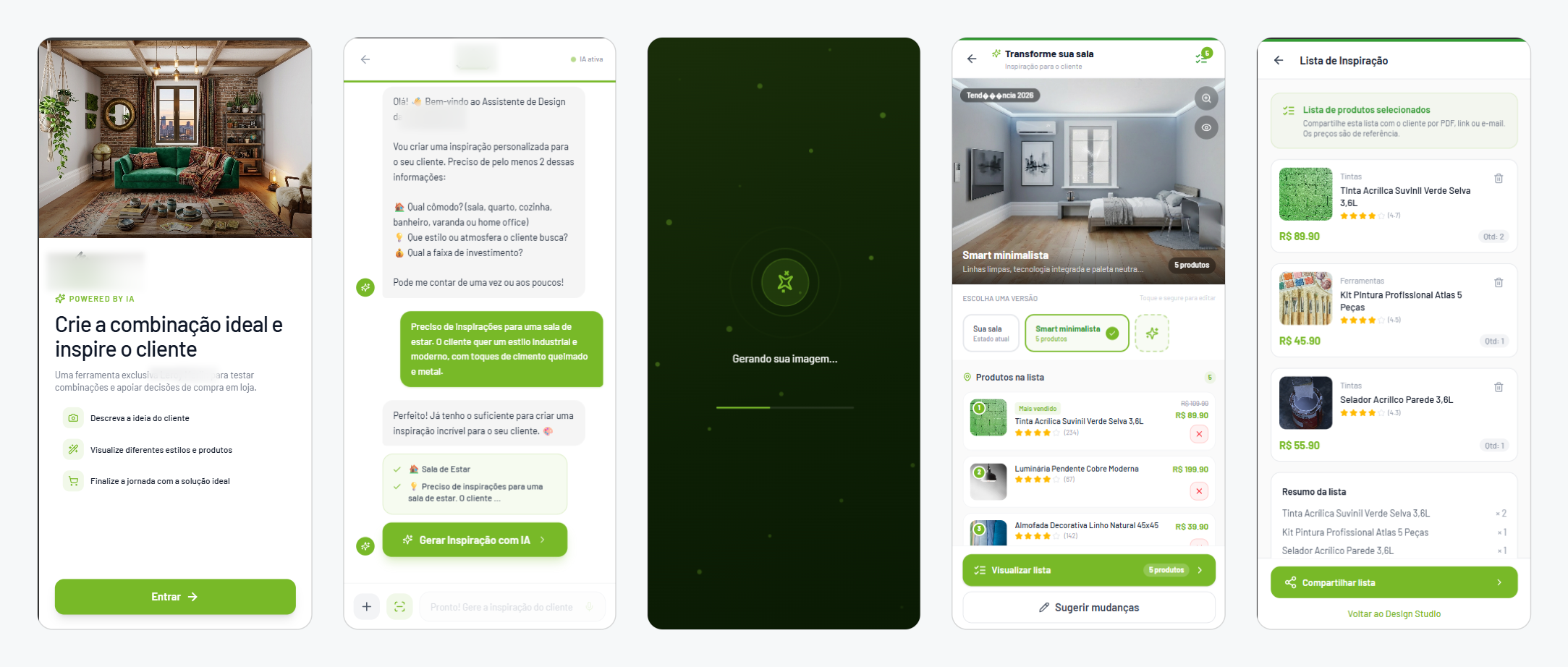
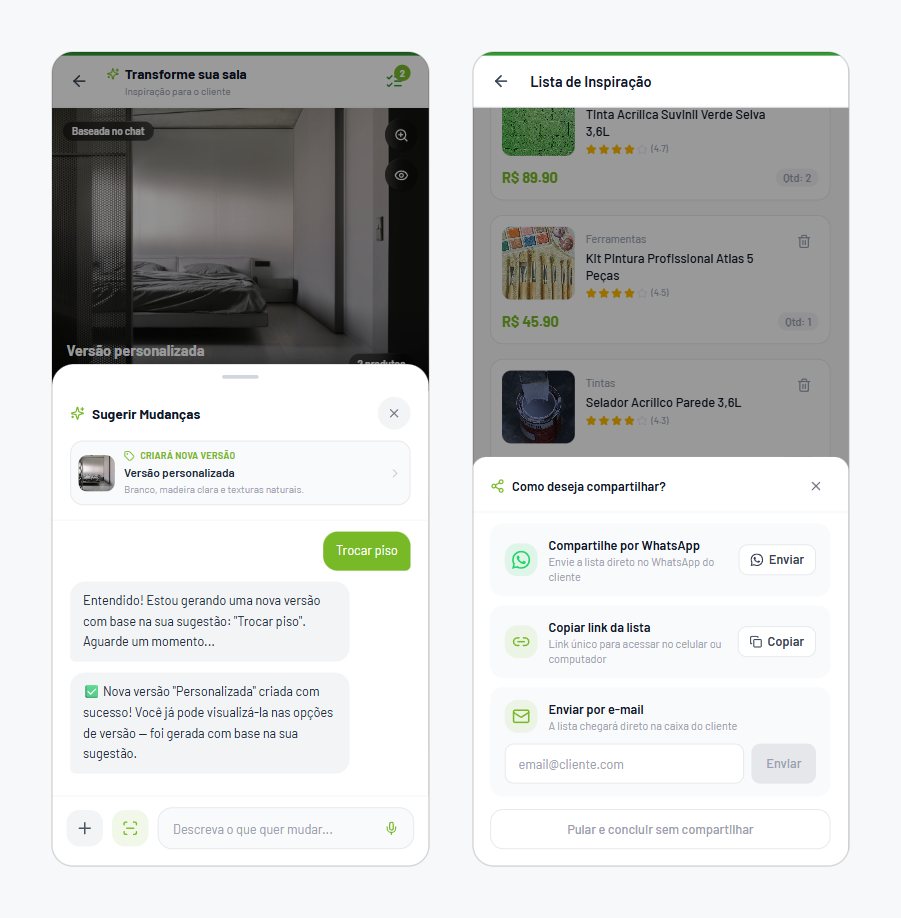
Every generated scene carries a product list with real SKUs and reference prices, versioned so the client’s own request and the AI’s suggestion can be compared side by side. The salesperson asks for changes in the same conversation, then shares the finished list as a PDF, a link or an email.
The design question in retail AI is rarely whether a model can generate a convincing room. It is whether what the customer sees can actually be bought, delivered and installed, which makes the assortment, not the model, the constraint that matters.
What it deliberately does not do
The application does not measure the room, so it never states how much of a product a project needs. That judgment stays with the salesperson, who has the tape measure and the conversation. Drawing that line is what keeps the tool trustworthy in front of a client.
- AI experience
- Customer journey
- Retail
- Concept and prototype direction
- Product recommendation
02 How I ran it
I decided who would be holding the phone.
The obvious build is a consumer app that lets the customer design their own room. I went the other way, and almost every decision after that follows from this one.
-
I designed it for the salesperson, not the customer
The tool sits with someone on the shop floor who is already in a conversation. That is where the product knowledge is, where the objection gets answered, and where the sale actually closes.
-
I fixed the briefing at three questions
Which room, which style, what budget. Ask more and the tool starts to feel like a form. Ask fewer and the result comes out generic. We made the briefing conversational so the salesperson can ask those three without it sounding like data entry.
-
I required every generated scene to carry a real product list
A generated image is easy. A generated image tied to real SKUs and reference prices is the version a retailer can sell from. Without the list it is a mood board with a logo on it.
-
I asked for versioning so the two proposals sit side by side
The client's own request and the assistant's suggestion are kept together, because the conversation that closes a sale is usually about the difference between what someone asked for and what they were shown.
-
I drew a line the tool does not cross
It does not measure the room, so it never says how much of a product a project needs. That judgment stays with the person holding the tape measure. Drawing that line is what keeps the tool trustworthy in front of a paying client.
That last one matters most. A tool that is confidently wrong about quantity in front of a customer costs more trust than the whole feature was worth.