
AI & Innovation Portfolio Vend.AI
03 · What’s next
From sales training to an intelligent sales coach.
An AI sales coach for a Latin American telecom operator. What it trains is not the script, but reading the person on the other side of the conversation.
- Role
- Direction of the product experience
- Organization
- Capgemini · Applied Innovation Exchange
- Client
- Latin American telecom operator
- Focus
- AI product · Learning experience
01 The work
I directed the creation of an AI-enabled sales coaching experience for a Latin American telecom operator, designed to support learning, knowledge development and commercial performance.
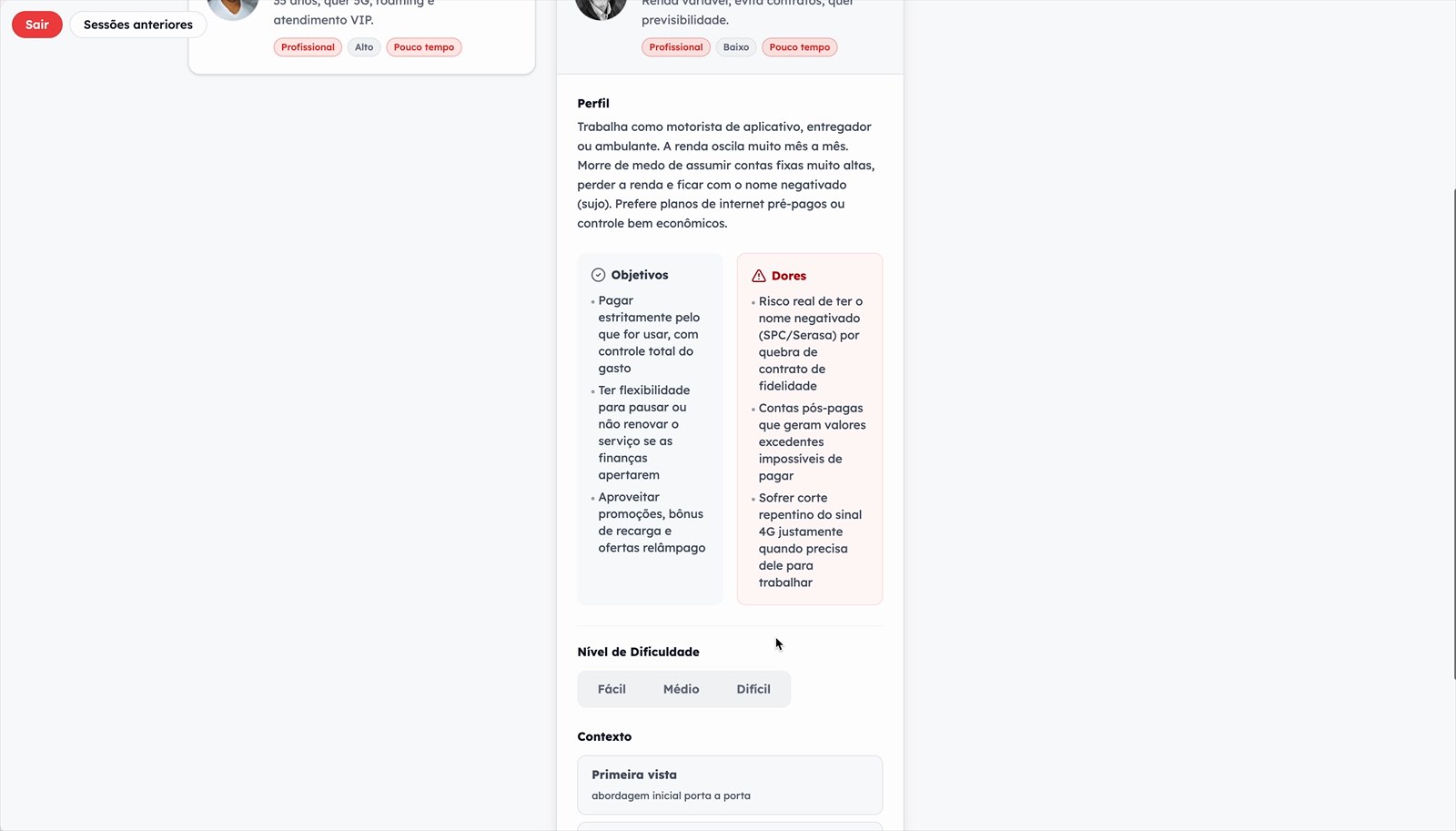
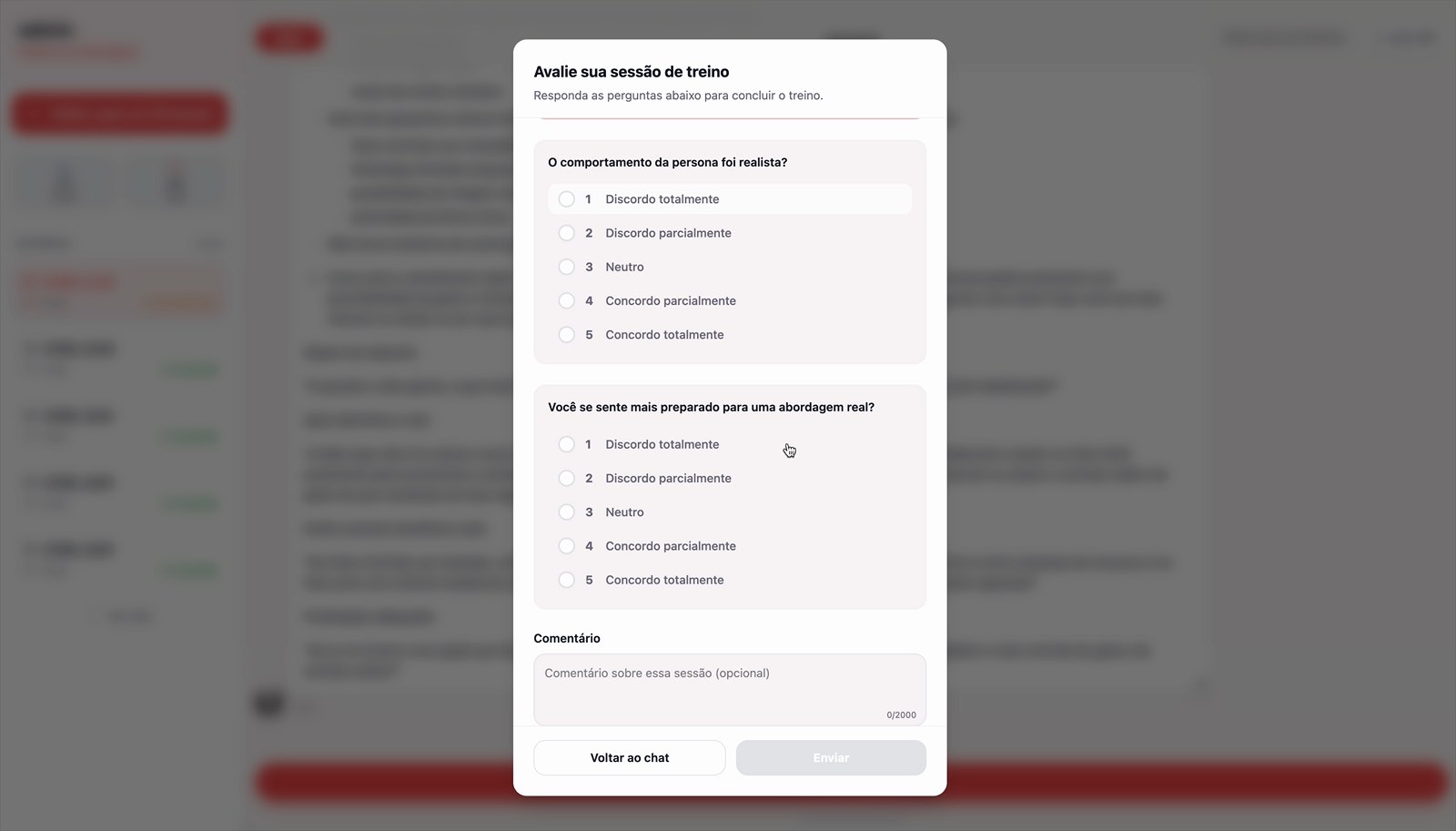
A salesperson picks a profile, works a live conversation against it and gets structured feedback on what actually happened in the exchange. The skill being trained is not the script. It is reading the customer in front of you.
The management layer closes the loop. It shows what teams practice, where they get stuck and how usage moves, which is what turns a training tool into something a commercial leader can actually run.
- AI product vision
- Learning experience
- Knowledge support
- Gamified development
- Pilot definition
Results
learning performance achieved within the first 4 weeks of the pilot
02 How I ran it
We trained the judgment, not the script.
Sales training products usually teach the pitch, because the pitch is the part that is easy to write down. I started this one by asking what a good salesperson actually does that a weak one does not.
-
I named the skill before we designed the product
What we are training is not the script. It is reading the person on the other side of the conversation and choosing what to say next. Once that was the stated skill, a course shaped product stopped being an option.
-
I asked for practice against a profile, not a curriculum
The product gives a salesperson customers to rehearse with instead of modules to complete. You can finish a curriculum without learning anything. You cannot fake a conversation past the point where it stops working.
-
I made the feedback about the exchange, not the answer
Sessions are assessed on what happened in the conversation. What was raised, what was missed, what was positioned. That is the level at which a salesperson can do something different next time.
-
I put running cost next to performance in the same view
The admin dashboard shows sessions, feedback indicators and token consumption together. An AI product whose running cost is invisible to the people approving it does not survive its own pilot.
We defined the pilot before we built, so there was a specific claim we could be right or wrong about. Without that you have a demo with a roadmap attached to it.